

FRAMECAD launches lower-cost steel framing machine
Wed, 23rd Sep 2026 (Today)
FRAMECAD has launched the Steelform Core steel framing machine, a lower-cost entry point into cold-formed steel construction.
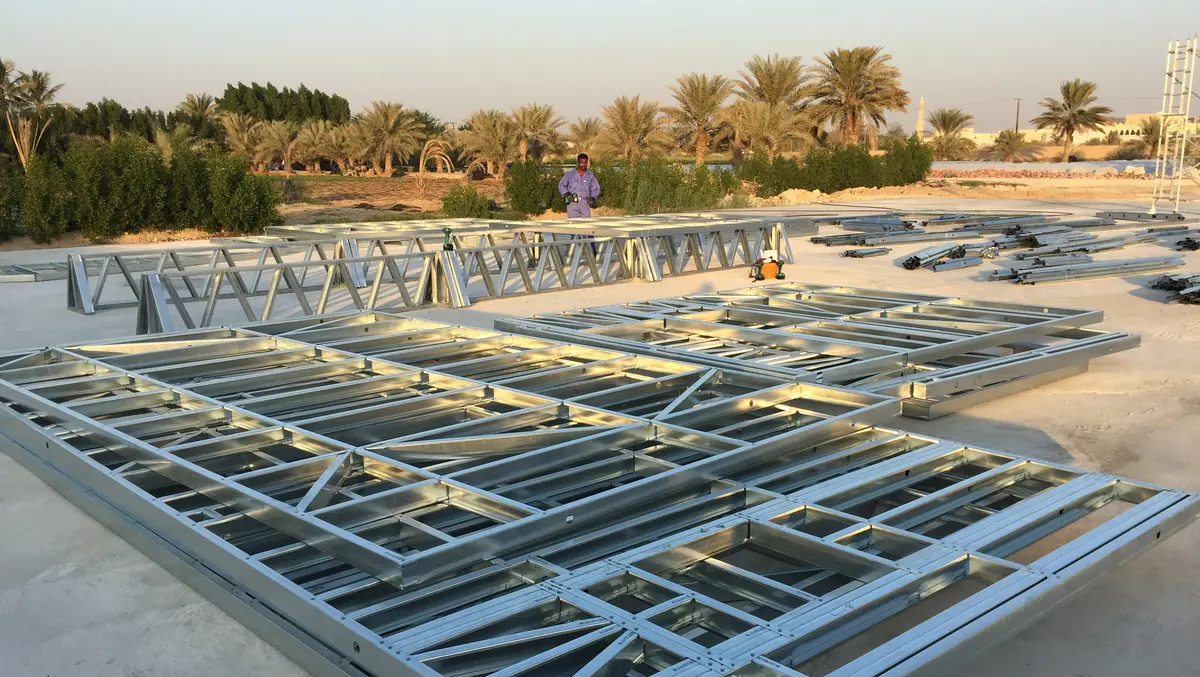
Aimed at builders and fabricators looking to move into steel framing without the larger upfront investment typically associated with higher-volume equipment, the machine produces cold-formed steel trusses, wall frames and floor joists for structures of up to three levels, including housing, schools, commercial buildings and institutional projects.
The launch comes as construction companies face pressure to deliver projects faster, cut waste and reduce reliance on scarce on-site labour. The new machine uses the same workflow as FRAMECAD's larger systems, allowing users to adopt steel framing in stages rather than commit immediately to higher production volumes.
Aaron Wright, Chief Executive Officer of FRAMECAD, linked the launch to those market shifts.
"Builders are looking for ways to build with more certainty, less waste and less dependence on site-based labor," Wright said.
"The Steelform Core gives them access to quality steel framing equipment that fits their business today, with the same connected workflow that can scale as they grow. Start with Steelform Core, and scale with FRAMECAD as you grow."
Market shift
Offsite manufacturing has taken a larger role in construction as companies try to move more work into factory settings, where production can be planned more tightly and on-site delays reduced. FRAMECAD says its steel framing process can cut build times by up to 50 per cent compared with traditional timber framing, while generating about 2 per cent material waste, which is recycled.
The company's broader approach is based on Design for Manufacturing and Assembly, which shifts more of the construction process into design, engineering and factory production before components reach the site. In practical terms, structural parts are designed in advance and manufactured ready for assembly.
Cold-formed steel, also known as light gauge steel, uses thin galvanised steel sections to create a building's structural frame. Machines form these sections into components with fixed dimensions, which FRAMECAD says helps reduce variation during construction.
FRAMECAD says the method offers practical advantages over timber because steel does not shrink, split or absorb moisture, and resists warping, termites and mould. That makes steel framing attractive in markets where builders are trying to improve consistency and reduce remedial work.
Software link
Each Steelform Core machine comes with FRAMECAD Nexa, the company's production scheduling and tracking software for the factory floor. It also connects directly with Steelwise, FRAMECAD's design and engineering software, giving users a single system from design through manufacturing to assembly.
That software link is central to the company's pitch for the new machine. Rather than asking customers to combine equipment and software from different suppliers, FRAMECAD is presenting Steelform Core as part of the same operating environment used across its wider range.
FRAMECAD says that common system should allow customers to keep the same design files, production data and operator skills as they expand output. That could matter for smaller manufacturers that want to add capacity over time without changing systems.
Productivity focus
Mario Tschopp, Product Manager at FRAMECAD, said the machine was designed around actual throughput rather than headline line speed alone.
"When people compare steel framing machines they tend to read line speed alone, but real productivity is finished frames and trusses per day," Tschopp said.
"We optimized the Steelform Core across punching and assembly, so customers get more finished frames from every minute of uptime. Because the whole FRAMECAD range runs the same Ecosystem, their designs, data and operator skills carry across as their volume grows."
FRAMECAD says the machine uses machine learning to optimise hydraulic performance and is engineered around finished frames per minute of uptime. It also says the model is about 50 per cent more energy efficient than comparable roll-formers and is Wi-Fi-ready for over-the-air updates.
The launch also reflects a broader push to expand steel framing adoption beyond established users. FRAMECAD says its technology is already used in about one in 10 new homes built in Australia, and sees scope for wider uptake in residential and commercial markets including the United States, Brazil and India.
Founded in New Zealand in 1987, FRAMECAD says its systems are used in more than 100 countries. Steelform Core gives the company a product aimed at firms that want to enter that system at a smaller scale while retaining the option to increase production later.